Views of Central Asia have historically been caught between an orientalised image from imperial powers and the visions that Central Asian societies hold of themselves. For this, the third volume of the Student Central Asia Forum, we invited proposals that consider the multitude of Central Asian horizons. We are delighted to present five submissions, encompassing journalistic articles, a film review, and several artistic prints. Our contributors engaged thoroughly with the complicated notion of horizons in Central Asia; they looked beyond traditional regional borders and sought to uncover how boundaries are made, reinforced, transgressed, or relaxed within the great variety of Central Asian cultures.
Robert Willard and Chaya Steinsaltz both analyse the position of Central Asia within the multicultural Soviet Union, as they take a transnational view when approaching the Aral Sea disaster (Willard) and the foundation of the Kazakh Academy of Sciences (Steinsaltz). Willard’s piece, informed by his long term advocacy at the World Aral Region Charity, provides an overview of the catastrophe which unfurled (and continues to develop) in light of Russian colonial exploration, and later Soviet economic and scientific policies. In contrast to the top-down decisions made in urban centres far from the sea without the consultation of local communities, the article ends on a hopeful note, as Willard draws attention to local detoxification initiatives in the area. In her work on the Kazakh Academy of Sciences, Steinsaltz sees how a region that was considered ‘peripheral’ to Moscow became a centre of research after a series of wartime evacuations. Steinsaltz’ essay proceeds through the case study of Bekmakhanov who faced persecution in Almaty for turning his historical talents to non-Russian political actors and reflects on the uneven treatment of academics in the Soviet Union.
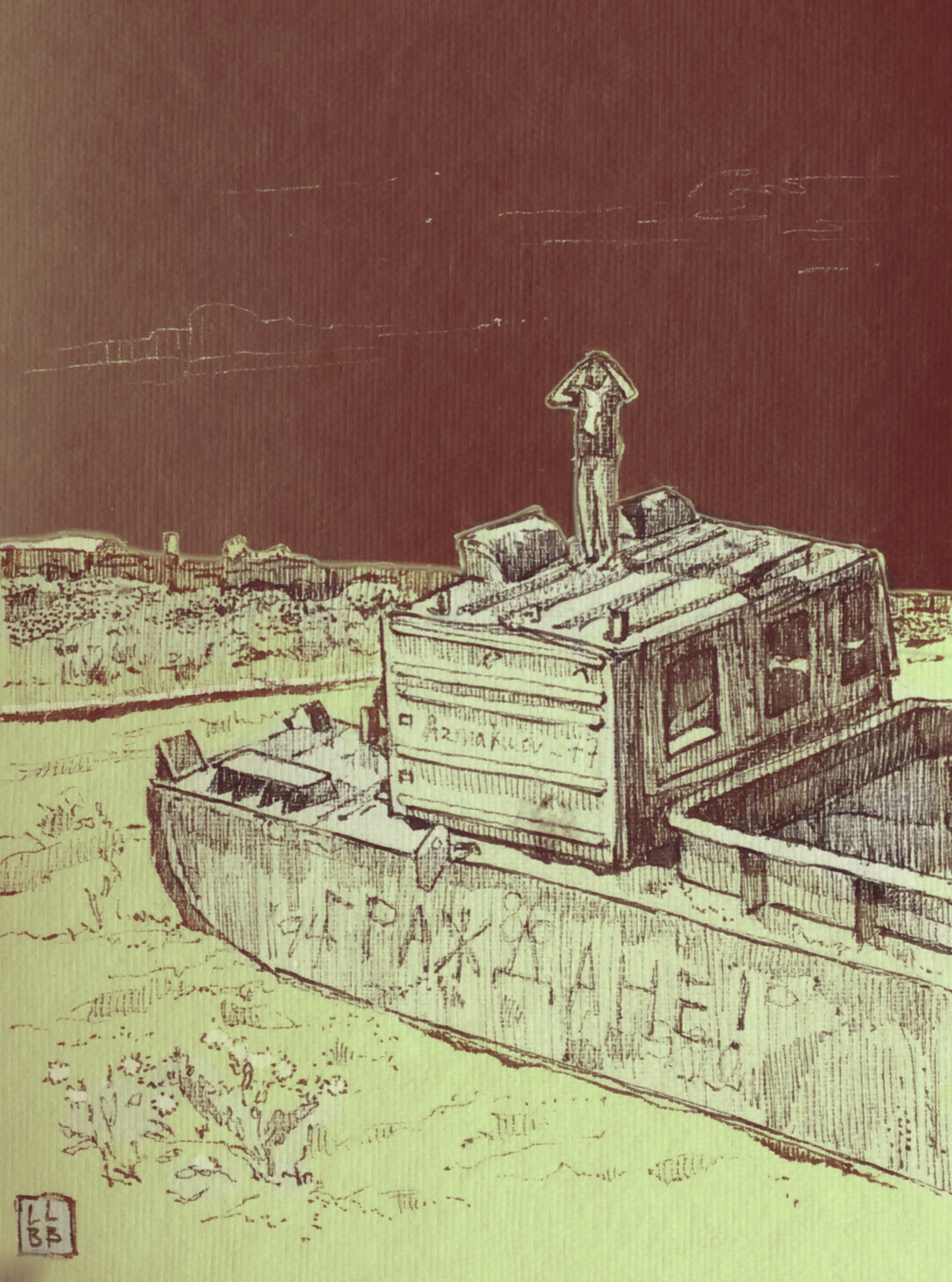
In this edition, our contributors have pushed farther afield to Western Chinese (Arshad) and Mongolian (Enkhee) populations. Looking at wider Central Asia, Basmah Arshad’s essay considers the importance of domesticity and food culture in diasporic Uyghur communities. Her work shows how, when deterritorialised from Xinjiang, food culture is at once a resistance to Chinese nationalism and a reminder of home. Arshad’s work considers video essays by Uyghur food creators in Pakistan, analysing the national identity that arises from cultural foods in foreign environments. In her review of The Eagle Huntress, Byambasuren Enkhee considers cross-cultural exchange in line with cultural resilience. In her work, she considers how a film that depicts a Kazakh community of eagle hunters in Western Mongolia falls into narrow Western centred tropes about ‘girl power’, failing to offer a nuanced depiction of a marginalised community working to preserve their culture in the face of economic adversity. Finally, Lyra Browning’s exquisite Ship series of prints form the cover to this issue. These prints were inspired by Browning’s travels in Karakalpakstan and the ‘ship graveyard’ in Moynaq, visually illustrating some of the desolation described by Willard.
The horizons of Central Asia are broad, diverse, and ever-changing. Our volume seeks to foreground this multiplicity, demonstrating that in this vast region, horizons are not fixed, but in a state of continuous flux.
The Editors: Colin (Kolja) Hood, Claudia Macey-Dare, and Lewis Ebert
July 2026
Oxford, Prague